AI, AR and Digital Content: New Possibilities for Applied Foreign Language Education


As generative AI rapidly reshapes industries around the world, education is also entering a period of change.
For an applied foreign languages department, preparing future talent involves more than language proficiency. Students also need intercultural communication, digital content creation, independent media production and the ability to use AI tools to meet the demands of international work.
On July 2–3, 2026, Jing-Yeu International was invited to the Department of Applied Foreign Languages at Taipei City University of Science and Technology for a two-day faculty workshop. Our aim was to offer more than a collection of AI tools: we began with global trends, explored how the world is changing and considered how these technologies could become part of language teaching, curriculum design and the department's student recruitment.
Start with global trends: Understand how AR is changing education
On the first morning, we began by looking at developments around the world before introducing software operations.
The course opened with examples of augmented reality (AR) in education, healthcare, cultural tours, museums, retail, tourism and corporate training.
We also presented research organizations' analyses of future AR/VR market size, educational applications and industry trends.
The goal was to help teachers see beyond a passing technology topic and recognize an important technology that continues to develop rapidly..
We then showed AR application videos from different countries, illustrating how educators use augmented reality to encourage engagement and interactive learning.


After establishing this global context, we introduced the AR software platform.

We explained that the most meaningful value of AR lies in using stories to encourage students to participate actively in learning.
Teachers began considering how applied foreign language courses, cultural introductions, English-language picture books, distinctive features of the campus and even student recruitment materials could become AR stories that learners scan and interact with. Could this encourage exploration and make the experience more memorable?
Through practical work, teachers completed their first interactive AR teaching materials and began considering AR as a medium for course design and student recruitment.
Virtual influencers: A new perspective on digital content creation
The afternoon session introduced the rapidly developing field of AI-powered virtual characters.We began with prominent virtual influencers from around the world, examining examples of their brand partnerships, market influence, advertising revenue and commercial value. These cases showed that virtual personalities are already active content creators in many markets.
We also explored applications of AI-powered virtual characters in education, brand marketing, entertainment, customer service, livestreaming, tourism and corporate training, asking why virtual characters appeal so strongly to younger audiences..
After exploring industry trends, teachers began creating digital versions of themselves.

Using VRoid Studio, each teacher created a personalized 3D avatar modeled on themselves, customizing facial features, hairstyles and clothing.
Teachers then combined their avatars with AI motion capture to perform and interact in real time.
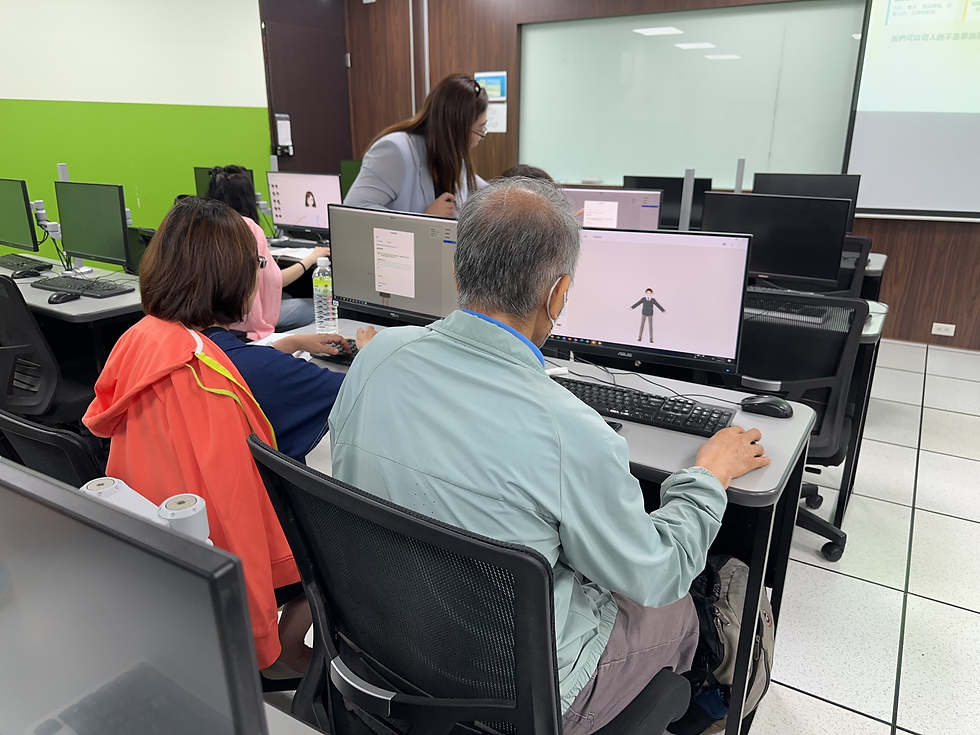
The room filled with surprise and laughter as the virtual characters waved, spoke and performed in sync with their creators.
By the end of the session, each teacher had recorded a virtual-character video and explored possible uses in speaking practice, scenario-based language lessons, cultural introductions and online teaching materials.
From livestreaming to independent media: A new stage for language education
On the second morning, we focused on an important skill in the AI era: audiovisual content creation..
The session began by comparing traditional live production systems with modern mobile switching equipment.
In the past, a livestream often required expensive equipment, several staff members and specialist production skills, making it difficult for many educators to get started.
As equipment has become more accessible and students have grown up with smartphones, short videos and social media, independent digital media has become a familiar form of communication for younger generations..
We discussed how applied foreign languages is particularly well suited to digital media creation..
Language is about communication.
Livestreams, short videos, interviews, presenting and intercultural exchanges
provide opportunities for students to demonstrate language skills, confidence and individual expression.
We demonstrated the mobile production switcher's functions and guided teachers through group practice.


Using smartphones connected to the system, teachers livestreamed between different classrooms and experienced the production process firsthand.
Many teachers were surprised to discover that a professional-looking teaching livestream did not necessarily require expensive equipment or a complex technical background.
The mobile switcher can integrate feeds from several smartphones, allowing teachers to record multiple camera angles and switch between them in the classroom. This reduces setup costs and opens up new possibilities for teaching, recruitment and showcasing student work..
AI-assisted creative design: Turn students' ideas into tangible work
On the second afternoon, we brought a dye-sublimation printer, heat-press equipment, assorted product blanks and sample merchandise so teachers could see how AI design connects with digital production.
We first explained the principles of AI image generation, helping teachers develop an informed understanding of AI beyond the idea that typing a sentence automatically produces a finished design.

After developing an understanding of how AI works, teachers began creating images based on their own ideas.

Each teacher produced a design in a different style, selected a sublimation product and received on-site support with printing.
Watching their designs transfer onto products made from different materials brought smiles of surprise.
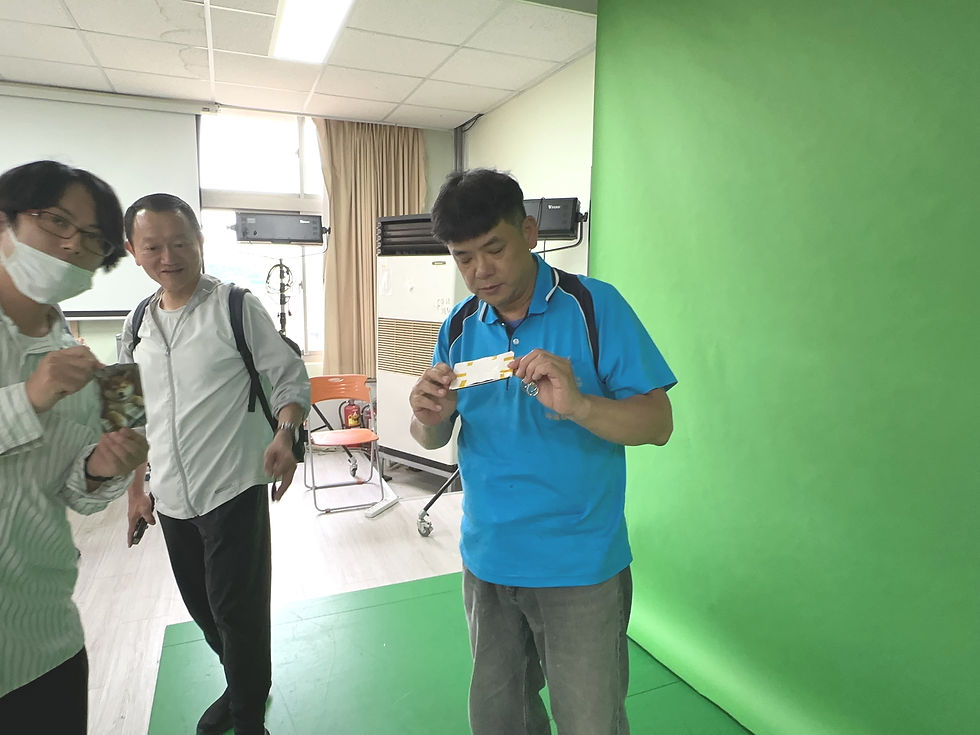
Participants saw how AI can support creative work and extend it into physical products, offering new ways to present teaching materials, learning outcomes, campus identity and recruitment messages.

The workshop ended with a group photo of teachers holding their finished products, celebrating two full days of learning.

AI opens up new possibilities for language education
Throughout the two-day workshop, we wanted to communicate one central idea:
What matters is understanding where education is heading, beyond simply learning more AI applications..
AR stories, AI-powered virtual characters, livestreaming and AI-assisted product design can help teachers create varied, engaging content that connects with the ways students learn.
For an applied foreign languages department, these tools can connect curriculum development with intercultural communication, international exchange, digital content creation and a distinctive departmental identity.
Thank you to the Department of Applied Foreign Languages at Taipei City University of Science and Technology for two days of enthusiastic participation, thoughtful discussion and openness to educational innovation.
We believe that combining technology with education helps teachers guide students in exploring the world and gives every classroom more room for innovation.
#AI #AR #DigitalContent | New Possibilities for Applied Foreign Language Education

To find out more, call Jing-Yeu International or contact us through our official LINE account. 🙌
👇 Join our official LINE account for the latest activities and teaching resources. 👇
👇 LINE ID: @244abdrd — you can also scan the QR code below! 👇


Comments